
By Operator One Editorial, 14 June 2026
Decathlon Marketplace is one of the few large pan-European venues built explicitly around a single vertical. For sport, outdoor and fitness brands, that focus is the entire reason to be there: the buyer who lands on a Decathlon product page is already in-category, already in a sporting mindset, and already trusts Decathlon's house brand as a quality reference point. That alignment changes the economics, the merchandising rhythm, and the operational standards a third-party seller has to meet. This guide walks through how the channel actually works in 2026, what curation looks like in practice, how a multi-country launch is sequenced, and which fulfilment options matter.
What Decathlon Marketplace is, and isn't
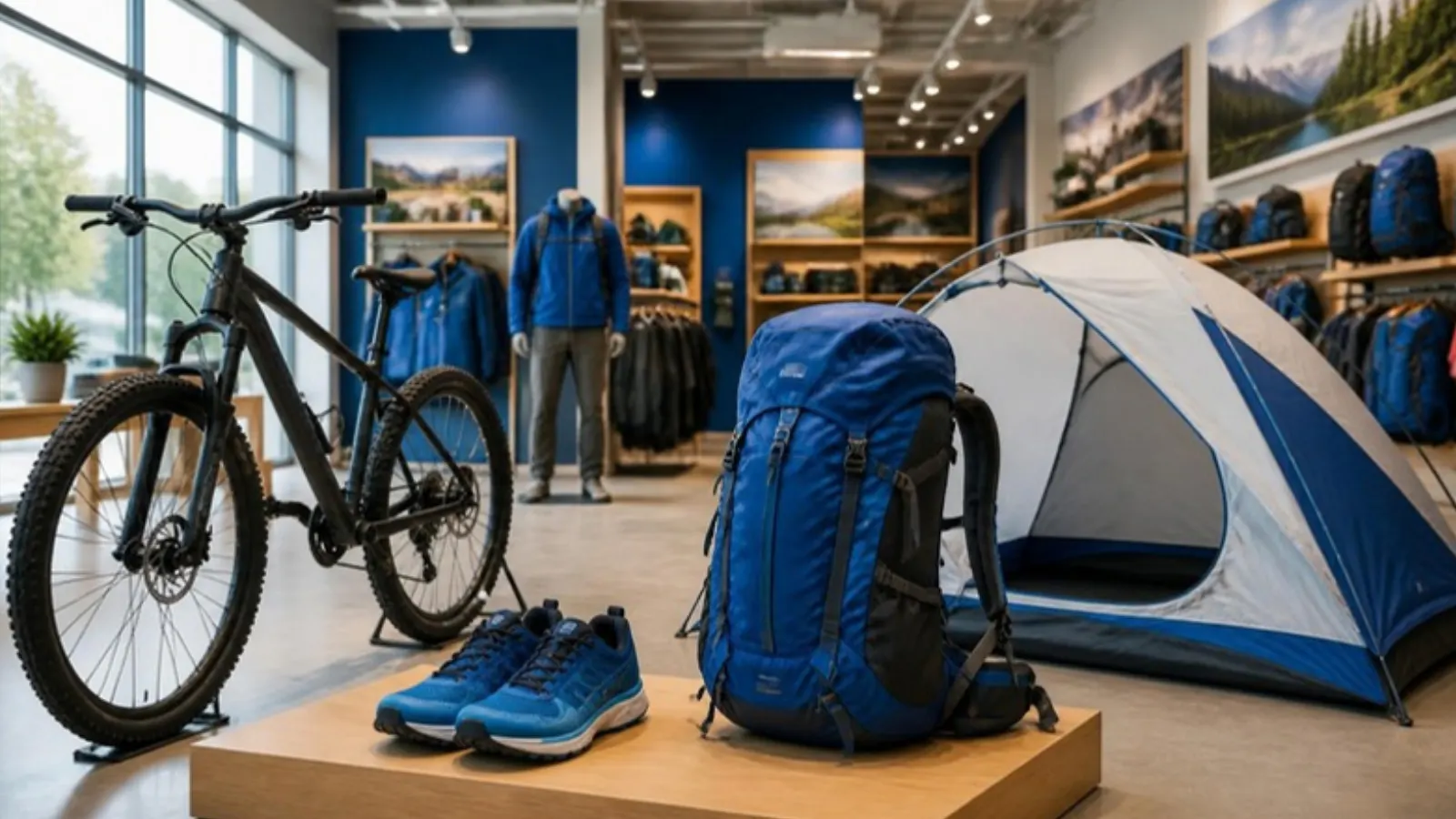
Decathlon's marketplace sits inside the same domain and customer account as its first-party catalogue. Shoppers see Decathlon's own products and third-party partner products on the same shelves, with a small "Sold by" line indicating the seller. The marketplace is curated rather than open: Decathlon picks partners and assortments deliberately, with the explicit goal of broadening the catalogue in sport, outdoor and fitness without diluting the in-store experience.
That has two consequences worth stating up front. First, the category gate is real, generalist consumer goods, beauty, home electronics, fashion outside the sport-adjacent envelope, and anything outside the sport/outdoor/fitness universe will not be accepted. Second, the bar for product data, imagery and post-purchase service is set against Decathlon's own first-party standards, which are higher than a typical horizontal marketplace.
Category and assortment focus
The accepted scope is broad within the vertical and narrow outside it. In practical terms, partners typically list in areas such as:
- Team sports equipment (football, basketball, rugby, handball, volleyball)
- Cycling: bikes, components, accessories, apparel
- Running, trail and athletics
- Fitness, strength, yoga, recovery and home gym equipment
- Outdoor: hiking, camping, climbing, mountaineering, ski and snow
- Water sports: swimming, surfing, sailing, paddle, diving
- Racket sports (tennis, padel, badminton, squash, table tennis)
- Equestrian, combat sports, hunting and fishing (where locally permitted)
- Sport-adjacent nutrition, supplements and recovery, where regulated
- Connected sport: GPS watches, bike computers, heart-rate monitors, smart equipment
Brands selling adjacent lifestyle items, for example a streetwear range with no genuine sporting use, are usually filtered out at application stage. A useful internal test before applying: would a Decathlon store manager realistically merchandise this product in their floor plan? If the answer is no, the marketplace listing will struggle through curation.
Partner application and curation
Entry is gated by an application that Decathlon reviews against assortment gaps, brand fit, sporting credibility and operational capacity. The typical evidence pack a brand needs to put together includes:
- Company registration, VAT numbers and EORI for each country of departure
- A clean product catalogue with EAN/GTINs, technical specifications, sport-use context and high-resolution lifestyle and packshot imagery
- Evidence of relevant compliance: CE marking for protective equipment, EN-standard certificates for helmets, ropes, harnesses and similar, food/supplement compliance where applicable
- An accurate description of the logistics setup: warehouse country, carriers, shipping zones, cut-off times
- A returns process aligned with Decathlon's 365-day mindset on first-party products (third-party sellers are not obliged to match 365 days, but the customer-experience benchmark sits well above the EU statutory 14)
- Localised content for the target markets (more on this below)
The review is qualitative as much as it is administrative. Brands that arrive with thin product data, generic Amazon-style bullet points and no sport-use context tend to be parked. Brands that arrive with proper technical sheets, sizing logic, athlete or use-case imagery, and a clear story about why the product belongs in a sporting catalogue tend to be onboarded faster.
Multi-market launch across Europe
Decathlon Marketplace runs as a network of country storefronts that share the partner backend but operate as distinct commercial fronts. France is the originating market and remains the largest single country, followed by Italy and Spain. Germany, Belgium, the Netherlands, Portugal and the UK are well-established; Decathlon has expanded marketplace functionality into additional European countries over the past few years, and the practical question for a brand is rarely "can I sell there", it is "which countries should I switch on, in what order, and with what content".
A pragmatic sequencing logic for a new EU partner:
- Phase 1, anchor market. Launch in France or the partner's domestic market first. Stabilise listings, customer service responses, and returns flow before broadening.
- Phase 2, adjacent core markets. Add Italy and Spain (large sport audiences) and the Benelux pair (NL/BE) which share logistics with the French and German networks.
- Phase 3, Germany and the UK. Both require dedicated localisation effort and, in the UK case, careful attention to post-Brexit customs flow and VAT registration.
- Phase 4, Portugal and further countries. Add once the catalogue, pricing and returns engine have proven they can absorb extra volume without service degradation.
Localisation is non-trivial. Content must be translated, not machine-rendered: sport-specific vocabulary (drop, last, stack height, rocker, EN-standard references, fit nomenclature) does not survive generic translation engines well. Pricing should be set per country in local currency with a defensible logic for parity or deliberate divergence. VAT treatment follows the standard EU OSS/IOSS or local-registration rules depending on where stock is held and where the customer sits, see our compliance glossary for the underlying definitions.
Fulfilment: FBR and the role of stock location
Decathlon's third-party model is built around Fulfilled by Retailer (FBR): the partner holds stock, the partner ships, the partner manages carrier relationships and returns. Decathlon defines service-level expectations, handling time, on-time delivery rate, valid tracking, in-full ship rate, and monitors them via partner scorecards.
Within FBR there is real flexibility in how a brand organises itself:
- Single-hub FBR. Ship every order from one EU warehouse. Simplest to set up, but transit times to far corners of the network (Iberia, Italy from a Dutch hub, or vice versa) can push against service-level expectations and lift cart abandonment on heavier sporting goods.
- Multi-hub FBR. Pre-position stock in two or three European nodes to bring transit times under two to three business days for the bulk of the population. Better customer experience, more complex inventory planning.
- 3PL-operated FBR. Outsource warehousing and carrier management to a 3PL while keeping the marketplace relationship in the brand's name.
Decathlon has piloted and rolled out logistics-assist programmes in selected markets that let partners lean on Decathlon-operated fulfilment or last-mile, but FBR remains the default mode for most partners and the assumption that is safe to build a launch plan around. Carriers commonly used by partners include DPD, GLS, DHL, Colissimo, Chronopost and country-specific networks; bulky sporting goods (bikes, weights, large outdoor equipment) usually require a dedicated bulky carrier and an enlarged returns budget.
Customer service, returns and reverse logistics
Decathlon's brand promise leans heavily on generous returns and responsive service. Third-party partners inherit some of that expectation by association. Practical implications:
- Respond to customer messages within Decathlon's published service-level window; missed responses degrade the partner scorecard quickly.
- Provide a clearly documented returns process with a return address inside the EU for EU shoppers, and inside the UK for UK shoppers, cross-border returns from non-EU addresses create friction and complaints.
- For sporting goods that are inherently try-and-return (footwear, apparel, helmets, racquets), assume a higher returns rate than a generalist marketplace and price the funnel accordingly.
- Have an inspection and refurbishment process for technical returns (bikes, GPS watches, fitness machines) before reselling.
- Handle warranty claims separately from change-of-mind returns, and document this in the listing and in seller communications.
Compliance and product responsibility
Sporting goods bring their own compliance stack. Helmets, climbing harnesses, ropes, life-jackets, child-carriers and protective equipment must carry the correct CE markings and EN-standard certificates. Electronics-bearing products (GPS, smart trainers, e-bikes, fitness devices) trigger WEEE, battery and packaging EPR obligations in each country of sale. Supplements and sport nutrition are tightly regulated and country-specific. Selling into the UK adds UKCA / UK conformity considerations, and selling into France adds the French triman, EPR and Refashion regimes depending on category.
For non-EU brands, the merchant-of-record question becomes structural: who is the VAT-registered seller of record, who carries product-compliance liability, who is named on the EPR registers, and who appears on the customer-facing invoice. Our merchant-of-record reference page explains how that role is structured for cross-border selling into Europe.
Practical pre-launch checklist
- Confirmed assortment fits the sport/outdoor/fitness scope
- Application pack: company docs, VAT/EORI per country, catalogue with EAN, compliance certificates, returns policy
- Localised content for each target country (not machine-translated)
- Pricing logic per country with VAT-inclusive consumer prices
- Warehouse and carrier plan that meets handling-time and delivery-time expectations
- Returns address inside the EU (and inside the UK if selling into the UK)
- Customer-service coverage in the languages of the markets switched on
- Scorecard monitoring set up from day one
Where Operator One fits
Operator One was founded in 2023 (HQ Almere, Netherlands; Lucca, Italy hub; KvK 90562704) and has delivered merchant-of-record services since 2021 across 27 EU countries and the UK, on more than 100 marketplaces. For Decathlon partners we handle the VAT-registered selling entity, EPR registrations, product-compliance documentation and the day-to-day operational rhythm, application, content, pricing, scorecard, returns and reconciliation, so the brand keeps its commercial focus on assortment, range planning and the sport-led marketing that Decathlon's audience actually responds to.